
Faded American Glory
At the end of World War 2 the United States really began to come into its own. It had, of course, been slowly building itself into an economic power since the turn of the century and had begun to show its military dominance, regionally at first, with the Mexican American War in the 1840s and the Spanish American War in the 1890s. It was only after World War 2 and the Korean War that the world truly started seeing the United States as not only a military and economic center but also a civilization with culture worth admiring. America still had deep social, cultural, racial, and gender issues to confront, but America began to bridge these issues in the 1950s. The birth of youth culture and the slow, but eventual, inclusion of minorities into the American cultural mix had started. Soon the world really began to appreciate the inclusive and forward-looking design ethos of Americana.
Lowell, Arizona got its start during this same time.
The Lowell & Arizona Copper Mining and Smelting Company soon opened the Lowell Mine nearby, which birthed the city, in 1899 and homes for the miners and staff followed. Business and entertainment came close on the heels of the people. The first two businesses to support the miners were saloons opened on Erie Street the following year. The town flourished and the nearby city of Bisbee soon annexed it in 1908. The town suffered from worker management friction in the 1910s culminating in the Bisbee deportation. The Cochise County Sheriff illegally detained and then deported over 1,300 striking miners and their supporters to Mexico. There were no convictions of those involved in the tragedy, even though a presidential commission found the act “wholly illegal”. The town was also able to weather the Great Depression. In the 1930s and 1940’s, many business and cultural institutions lined Lowell’s main street. It even boasted the first movie theater in the district.
Like many towns in the southwest, it was not meant to last. As the mine pulled increasing amounts of copper to support the American dream, the town itself became – literally – swallowed by the mine. The Phelps Dodge Corporation, which had taken over the operation, began a new open pit mine, the Lavender Pit in 1950. Production at the mine increased and the Lavender Pit grew. Success at the mine was, ironically, the source of Lowell’s eventual demise. The expansion required the Southern Pacific Railway to abandon a section of the railroad in 1951 and by 1959 Highway 80 needed a major relocation because of the increasing mining work. Mining operations totaled 86 million tons of ore in 1974. This was also the same year that mining operations ceased. As the pit grew, the citizens abandoned most of their homes or moved away, and a town once totaling 6,000 dwindled to almost nothing.
But only almost.
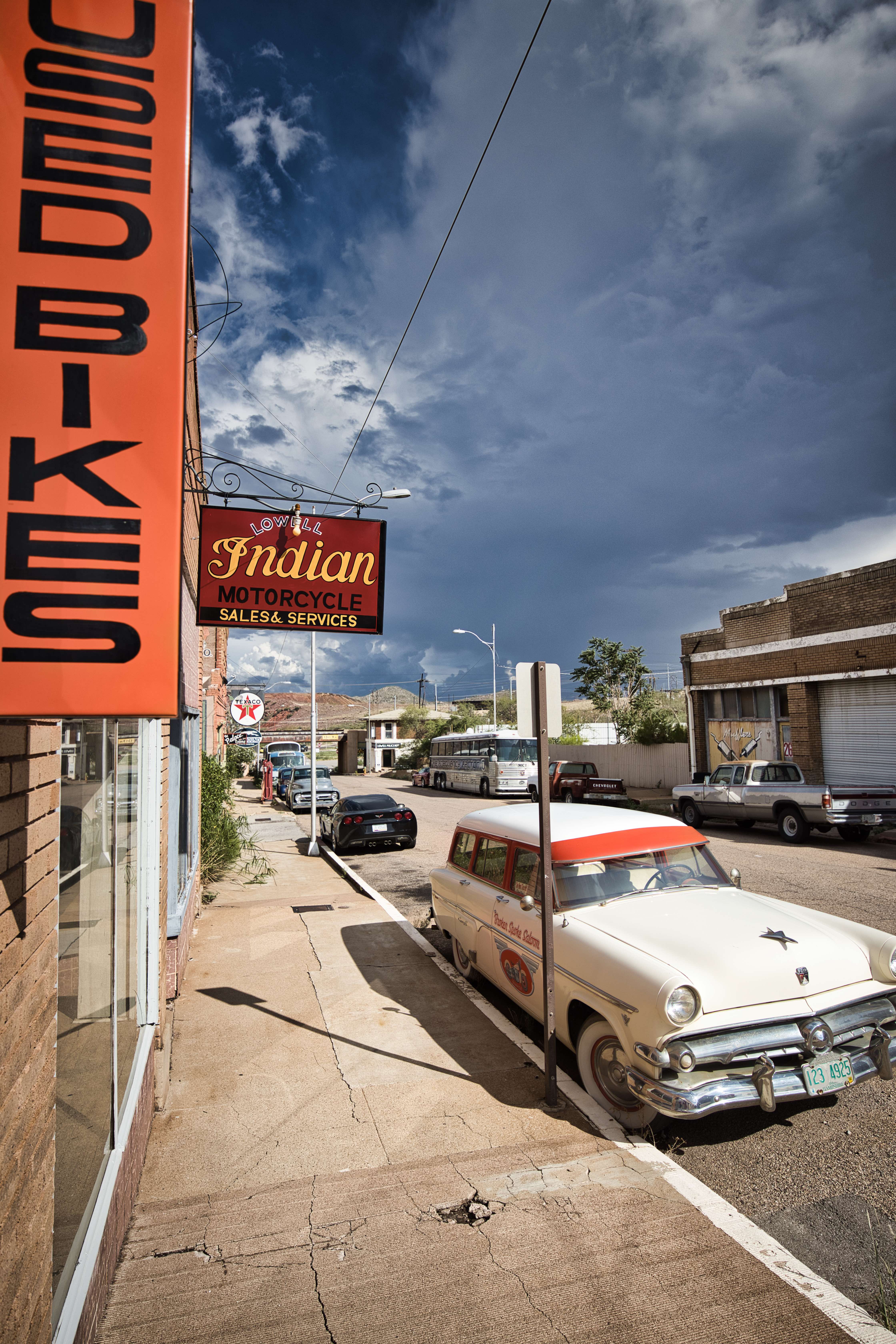
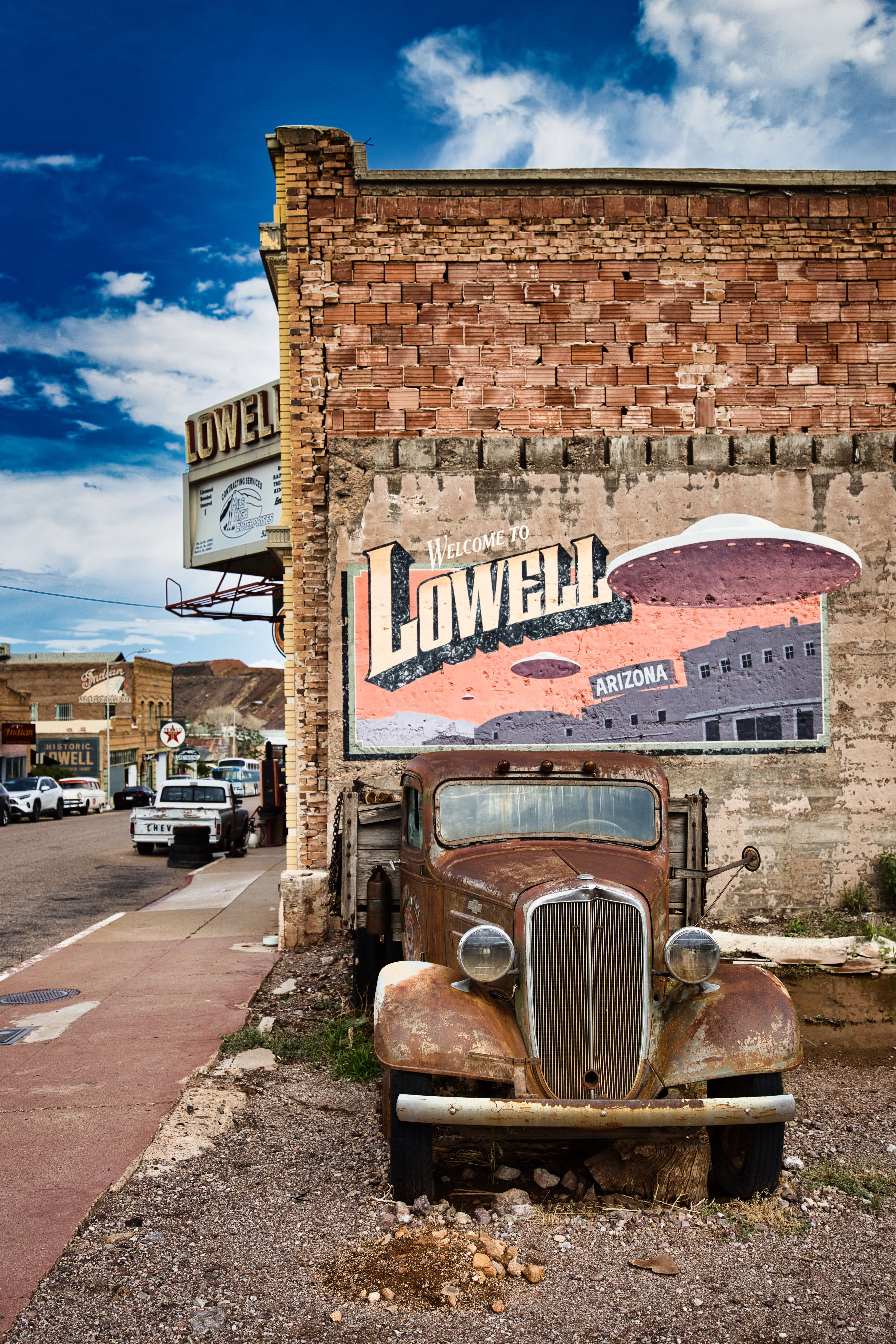
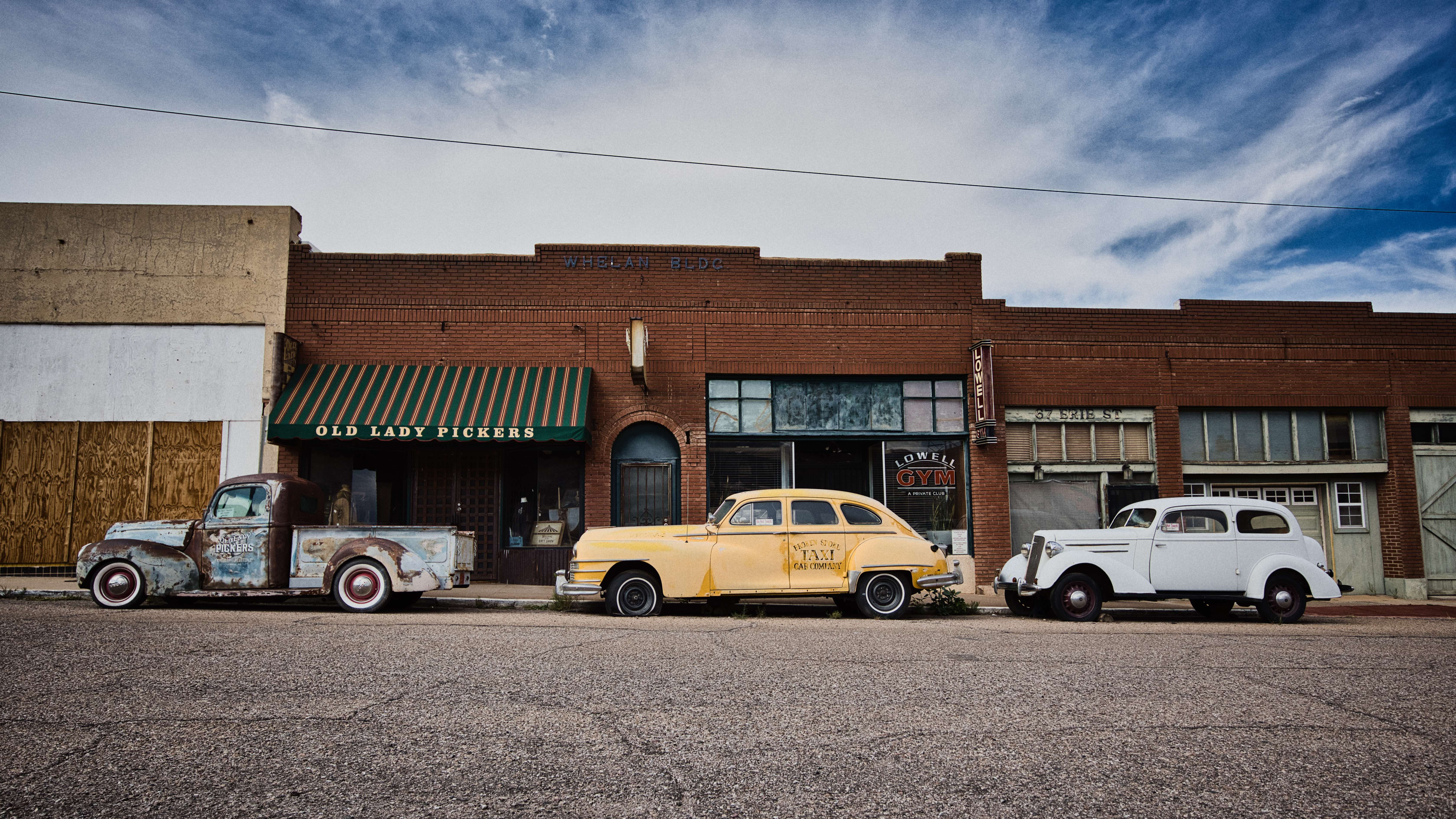
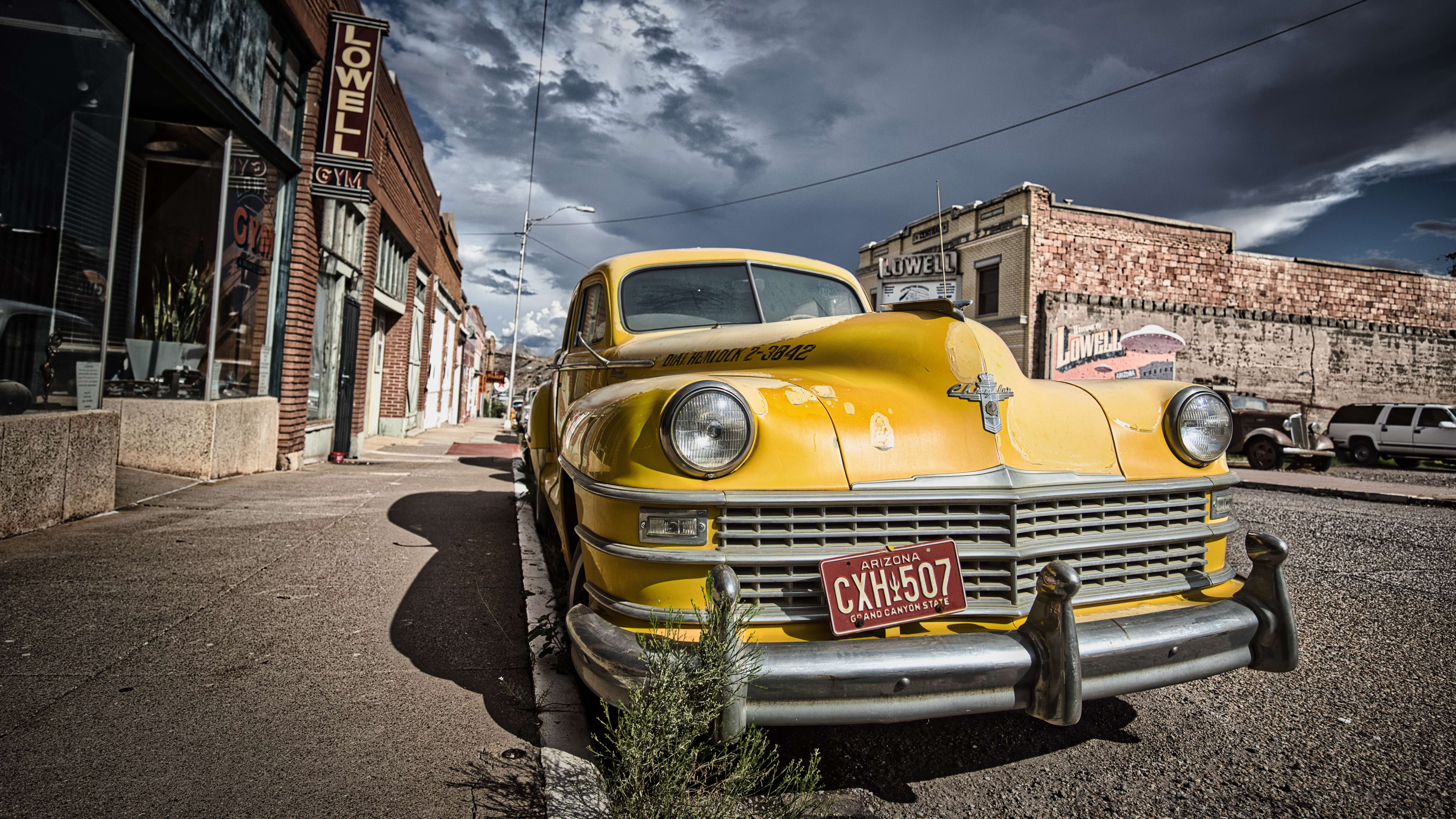
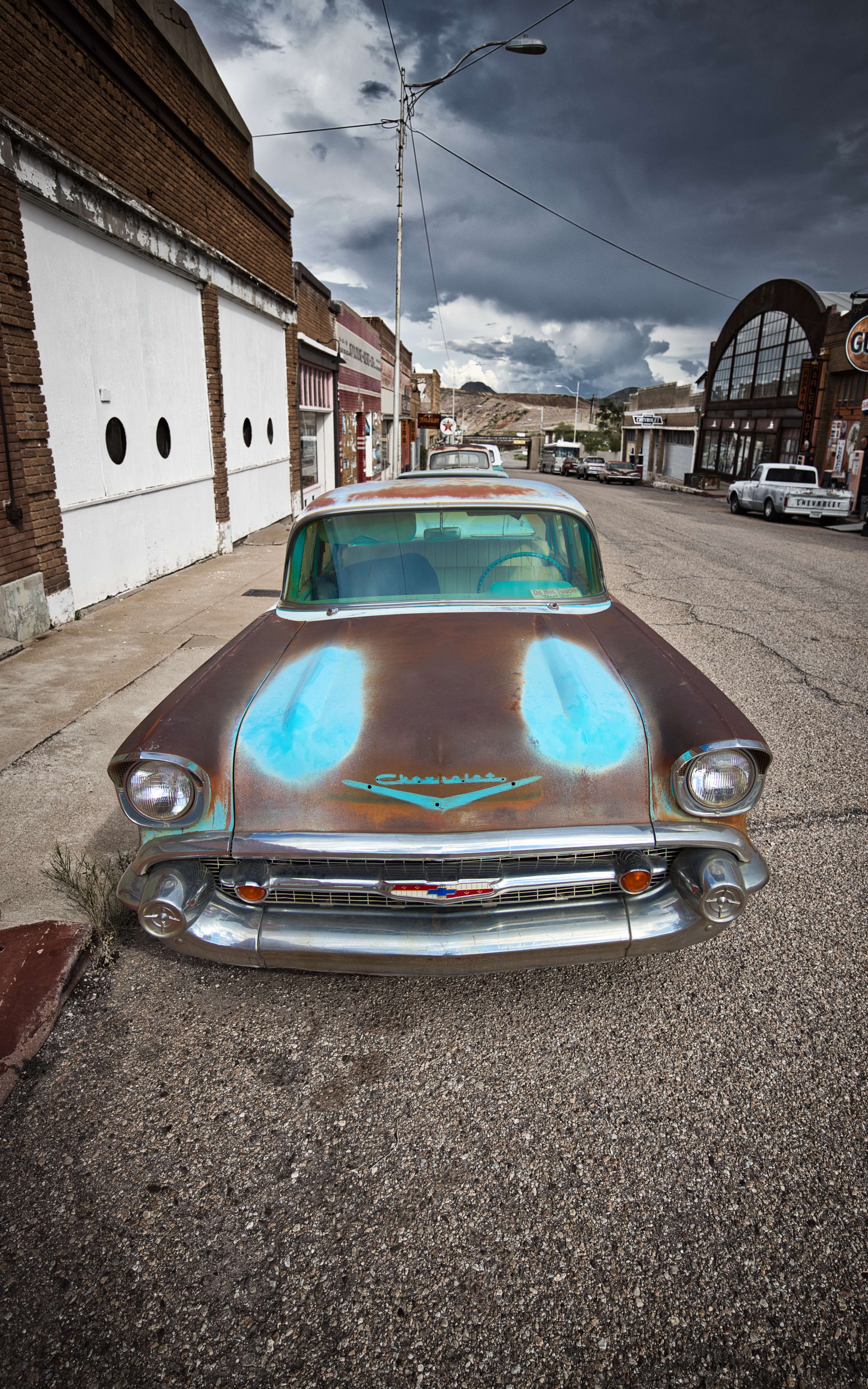
Lowell’s main street of Erie still stands, and a few intrepid people still call Lowell (not Bisbee, but Lowell) their home. They celebrate the cultural style and architecture of America and the American Southwest of the 1950s and 1960s. The remaining residents have turned a quarter-mile stretch of Erie Street into an open-air museum. Volunteers have spearheaded the Lowell Americana Project to preserve and restore the street with colorful signs, storefronts and vehicles from the 1950s and 1960s. The project has garnered national and international recognition and media attention for its cultural preservation efforts. The refurbishment of the vehicles, as well as the preservation of the local movie theater and gas station, have made the location one of the most photographed sites in Arizona. You can even have breakfast in a 1950s themed diner at the Bisbee Breakfast Club before you enjoy the street.
If you ever get the chance to travel old Route 66 through this part of the country, it is worth a day to see the town of Lowell and think back to an earlier time.
 Ramblings of a distracted mind.